New Choir 2023 – 2024 Season
2023 Spring Concert
The Storm is Passing Over
June 3rd 7:30 pm & June 4th 5:00 pm
Tap on the links below to jump to a desired section.
Program Note
(provided by Paul Ingraham)
The Ground
Deep River
O Vos Omnes
When David Heard
Blue Bird
O-Gahm-Do
The Deer’s Cry
Jesu, meine Freude
The Storm Is Passing Over
Drop, Drop Slow Tears
Cantate Domino
About the New Choir

The New Choir, an auditioned chamber choir performing choral works from all genres, was founded in August of 2000 by the Music Director and Conductor Eileen Chang. The choir is composed of around twenty-five singers from the greater San Francisco Bay Area, and has been conducting regularly scheduled performances in the Bay Area since its founding.
Members of the New Choir have been brought together by their common love for the making of beautiful music. The New Choir is dedicated to the study and performance of quality choral literature and sharing the joy and spiritual enhancement inherent in the making of music.
The New Choir has been recognized for their performances of thoughtfully prepared programs. The choir receives frequent requests for guest performances in the San Francisco Bay area and, in March of 2006, was honored with an invitation to perform at the American Choral Directors Association (ACDA) Western Division Convention where the choir’s performance was received very warmly. Recently, the New Choir received a Golden Diploma in the 2016 Golden State Chorale Trophy Competition in Monterey.
The New Choir is a 501(c)3 non-profit organization. Donations to the New Choir are fully tax-deductible. The activities of the choir are funded through tax-deductible donations of individual donors, concert ticket sales, and grant from the Arts Council Silicon Valley, in partnership with the county of Santa Clara and the California Arts Council.
Biography
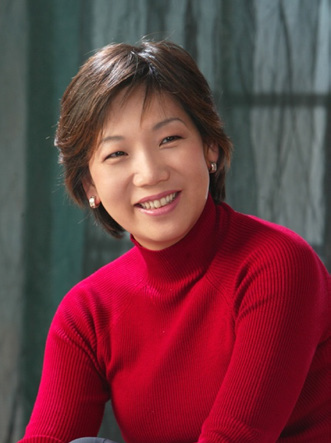
Eileen Chang
Conductor
Eileen Chang is the founding Artistic Director and the conductor of the New Choir. She completed her undergraduate studies in Voice Performance at CSU Long Beach and her graduate studies in Choral Conducting at the Westminster Choir College, Princeton, New Jersey. At Westminster, Ms. Chang studied with Dr. Joseph Flummerfelt and performed as a member of the Westminster Choir. She has performed under the direction of Kurt Mazur, Lorin Maazel, and Wolfgang Sawallisch in various venues including the Kennedy Center, Lincoln Center, Carnegie Hall, and the Spoleto Festival USA. Ms. Chang’s music has been shaped and influenced under the tutelage of Hoon Cha Chai, Joseph Flummerfelt, and Christian Grube.
Ms. Chang is passionate about choral music and all related activities. She has served as a lecturer at the Presbyterian Seminary of Korea and Hyupsung University, where she taught Conducting Technique and Choral Literature. She was the Artistic Director at Cantabella Children’s Chorus and her Honor Choir won numerous awards at the 2009 and 2015 Golden Gate International Children and Youth Choral Festival, 2012 World Choir Games in Cincinnati, and 2019 Jeju World Youth Choir Festival. Ms. Chang was also a Conductor-in-residence for the Cantabile Youth Chorus of Silicon Valley, Fall 2022.
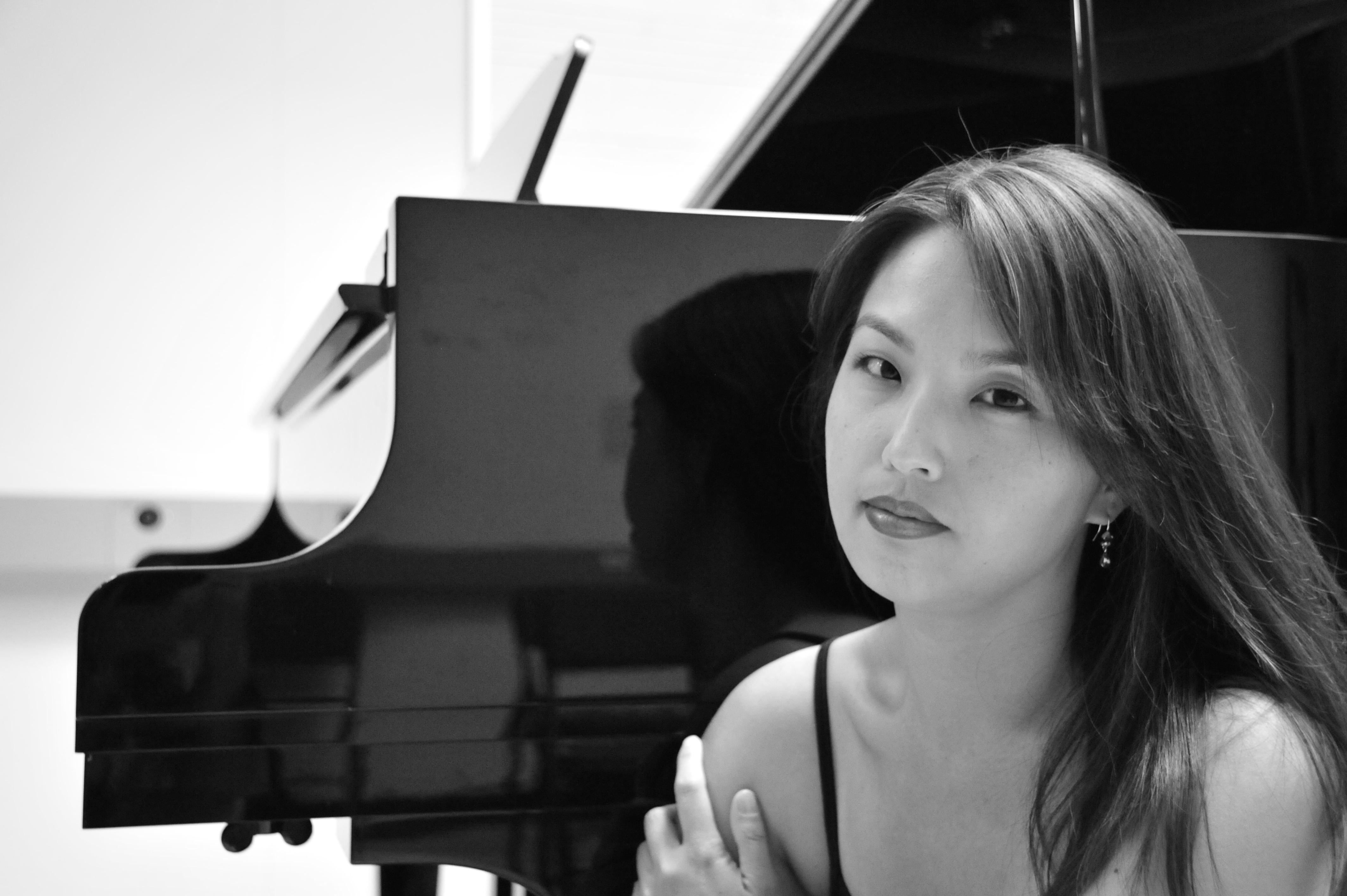
Ajung Won
Accompanist
Ajung Won received her Bachelor and Master of Music in Piano Performance and Piano Accompanying at San Francisco Conservatory of Music, where she studied with Mack McCray and Timothy Bach. She was a first place winner at the 1992 Young Artist Beethoven Competition, where she performed in a master class with Garrick Ohlson, and as a prize, appeared on Grand Piano. With over 20 years of experience in teaching and accompanying, she’s actively accompanying various groups of performers, private studios, and choirs in the Bay Area. She is currently the pianist at Cupertino High School Choir. Her solo performances include Beethoven’s Choral Fantasy with SF Master Chorale and SF Korean Symphony at Herbst Theater in 2009 and Grieg Piano Concerto with Silicon Valley Philharmonic at Mission Santa Clara in May of 2014.
Ajung Won received her Bachelor and Master of Music in Piano Performance and Piano Accompanying at San Francisco Conservatory of Music, where she studied with Mack McCray and Timothy Bach. She was a first place winner at the 1992 Young Artist Beethoven Competition, where she performed in a master class with Garrick Ohlson, and as a prize, appeared on Grand Piano. With over 20 years of experience in teaching and accompanying, she’s actively accompanying various groups of performers, private studios, and choirs in the Bay Area. She is currently the pianist at Cupertino High School Choir. Her solo performances include Beethoven’s Choral Fantasy with SF Master Chorale and SF Korean Symphony at Herbst Theater in 2009 and Grieg Piano Concerto with Silicon Valley Philharmonic at Mission Santa Clara in May of 2014.
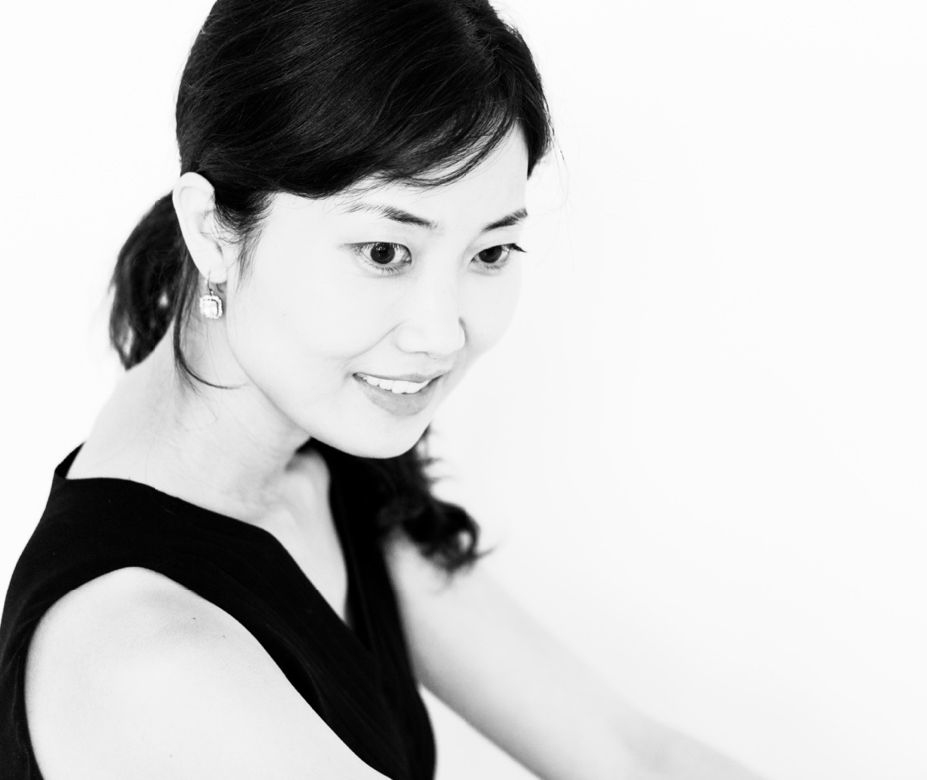
Jumi Lee Kim
Soprano
Ms. Kim attended an art high school for voice and received her Bachelors in Voice as a summa cum laude and did course work towards a Masters in Education of Music in Seoul, Korea. She also received her Masters in Voice from the San Francisco Conservatory of Music in 2006. She received opera experience in Sonoma State University and Golden Gate Opera. Ms. Kim received the first place in the Redwood Chapter of the National Association of Teachers of Singing in 2004. She sang with the San Francisco Concert Chorale from 2004-05. She also has experience as a vocal coach with the San Francisco Korean Children’s Choir.
She sang as the soloist with the Korean Symphony Orchestra at Herbst Theatre in 2011 and 2012. Ms. Kim served as a soloist at the San Francisco Korean Methodist Church for five years. She is currently singing as a member of the Valley Concert Chorale and New Choir. She sang the soprano solos for Handel Messiah and Faure Requiem with the Valley Concert Chorale in 2010 to current and Viva La Musica in 2014 and 2015. She teaches Hymnal and church music history at the Berkeley Christian College from 2014 to 2020. She studied Music Education with Kodaly Emphasis and Coral Conducting at Holy Names University in 2016-2017. She was music director at OPUS youth Choir from 2017-2019. She also teaches Voice and Music Theory at Cantabella Children’s Chorus from 2014 to current and a Music director at Cantabella Children’s Chorus from 2016 to current. She is currently an active member of the Music Teachers’ Association of California.
Program Notes
Provided by Paul Ingraham
The Ground from Sunrise Mass (2008)
| Ola Gjeilo (b 1978)
Norwegian-born pianist and composer Ola Gjeilo (YAY-lo) came to the USA in 2001 to study in New York. He now makes his home in Orange County, California. He studied at the Norwegian Academy of Music, the Juilliard School and the Royal College of Music where he received his bachelor’s degree. He earned a master’s degree in composition at Juilliard. His compositions include works for piano and wind symphony as well as many frequently performed choral works.
Composer’s note:
The Ground is based on a chorale from the last movement of my Sunrise mass. The chorale, beginning at Pleni sunt caeli. . . is the culmination of the mass, and it’s called Identity & The Ground because I wanted to convey a sense of having ‘arrived’ at the end of the mass; to have reached a kind of peace and grounded strength, after having gone through so many different emotional landscapes in the long journey of the mass.
The Latin text is a compilation taken from the Sanctus, Benedictus, and Agnus Dei mass sections that conclude the mass.
Pleni sunt caeli et terra gloria tua.
Osanna in excelsis.
Benedictus qui venit in nomine domini.
Agnus Dei, qui tollis peccata mundi,
Dona nobis pacem.
Full are the heavens and earth of your glory.
Hosanna in the highest.
Blessed is he who comes in the name of the lord.
Lamb of God, who takes away the world’s sins,
Give us peace.
Deep River
| African-American Spiritual
This spiritual, one of the “slow, quiet” spirituals, was printed in the first edition of The Story of the Jubilee Singers: With Their Songs in 1867 and popularized by Henry Burleigh in his 1916 collection of Jubilee Songs of the USA. Thanks largely to Burleigh’s many arrangements, the song has been called “perhaps the best-known and best-loved spiritual”.
The text suggests that the singer is seeking the peace that will come with death, symbolized by crossing the Jordan River, the traditional boundary of the Holy Land. It is an invitation to seek release from the hardships of earthly life and embrace the abundance of heaven.
The mention of campground is a metaphor for Heaven, but it also refers to the place where camp meetings were held. Slaves attended these meetings to share their sorrows and hopes, sing their songs and play instruments, and find at least a short-lived sense of freedom.
For this concert, we present two quite different arrangements of this piece.
The first is by Moses Hogan (1957-2003), African-American pianist, conductor and arranger whose work includes such familiar spiritual pieces as Elijah Rock and Ain’t-a That Good News. This version of Deep River is a simple, expressive setting of the text.
Juman Lee, a music designer at NCSOFT Sound Center, a company that provides background music to the gaming market, wrote the second setting for his sister, soprano Jumi Lee. Juman studied composition at the New England Conservatory and received his master’s degree in film music scoring for film and television, at the University of Southern California. This is a contemporary, richly scored arrangement for solo voice and piano.
Composer’s Note:
The beautiful waves of the Jordan River expressed in this black spiritual,
A prepared land of peace dimly visible on the other side,
At least a little bit, through this arrangement, I try to draw it carefully with a longing heart.
Deep river, my home is over Jordan.
Deep river, Lord, I want to cross over into campground.
Oh don’t you want to go to that Gospel feast?
That promise land where all is peace?
Deep river, Lord, I want to cross over into campground.
O Vos Omnes
| Tomás Luis de Victoria (1548-1611)
The late Renaissance Spanish compose, Tomás Luis de Victoria, was the most famous composer in 16th century Spain and, with Palestrina, Orlando de Lassus and William Byrd, one of the most important Counter-Reformation composers. He went to Rome around 1564 and joined the monastery of St. Francis of Loyola serving as maestro di cappella and was ordained a priest in 1575. He returned to Spain in 1586 to serve as priest, composer, choir director and organist at the convent of Descalzas Reales in Madrid for the rest of his life.
Victoria made two settings of O Vos Omnes, the first in 1572 for SATB choir, and the second in 1585 for SSAT choir as part of his Officium hebdomadae sanctae, Offices for Holy Week. as the second responsory for Holy Saturday. It is this latter setting that we perform today.
The text for O Vos Omnes comes from the biblical book of Lamentations 1:12. The prophet Jeremiah laments the captivity of the Jews by King Nebuchadnezzar of Babylon in 586 BCE.
This text is also used during Holy Week services to portray the suffering of Jesus before Pilate and for the Feast of the Seven Sorrows of the Blessed Virgin Mary in which Mary weeps for her crucified son.
O vos omnes qui transitis per viam
Attendite, et videte si est
dolor similis sicut dolor meus.
Attendite, universi populi,
et videte dolorem meum.
O all you who pass by on the road
Attend, and see if there is
any sorrow like my sorrow.
Attend, all you people,
and see my suffering.
When David Heard
| Thomas Weelkes (1576-1623)
This English composer, and organist is best known for his madrigals and church music. He published his first book of madrigals at age 20 in 1597 and was appointed organist at Chichester cathedral the following year. He received his bachelor of music degree from New College, Oxford in 1601. Weelkes wrote more Anglican services, mainly evensongs, than any other composer of his day.
When David Heard is a sacred madrigal that the composer dedicated to the music collector Thomas Myriell who included it in his 1616 anthology Tristitiae remedium – Cure for Sadness.
It relates the story of the king David’s third and favorite son, Absalom, found in 2 Samuel 13-19. The text of Weelke’s piece is 2 Samuel 18:33.
After David’s son Amnon raped his sister Tamar, Absalom swore to avenge his sister and, two years later, killed Amnon. Absalom then fled to avoid David’s wrath. David, finally consoled over Amnon’s death, wanted to see Absalom, but Absalom conspired to overthrow David. Both men rallied forces, and the Battle of Ephraim’s Wood ensued in which Absalom’s long hair was caught in the branch of a tree as he rode under it on his mule. Though David asked his enemies to spare Absalom, David’s men killed him as he hung from the tree. Hearing the news, David was overcome with grief.
When David heard that Absalom was slain,
He went up to his chamber over the gate and wept
And thus he said:
“O my son, Absalom,
would God that I had died for thee,
O Absalom, my son.
Blue Bird (Traditional Korean Folk Song)
| Arranged by Jung Sun Lee
Jung Sun Lee received her Bachelor of Arts degree in French at Ewha Women’s University in Korea and began her graduate work in music at Ohio University. She completed her Master of Music program at Meredith College in Raleigh, North Carolina where she studied composition with Dr. Anthony Vaglio. While at Meredith she was nominated for membership in the Pi Kappa Lambda Honor Society and commissioned to compose for the Meredith Girl’s Chorale. She is a native of Seoul, Korea and resides in San Jose where she performs with The New Choir.
The Donghak Peasant Revolution of 1894 was the first nationwide farmer’s uprising in Korean history. The peasant movement was borne out of frustration with a corrupt government that was out of touch with the populace and the burdens of increasing poverty, uncertainty and crushing taxes for the poor masses. The movement reached its zenith in 1894, turning its efforts toward resisting Japan’s forcible entry into Korea. The revolution’s best-known leader, Bong-Joon Chun, was captured and executed by the Korean government in 1895. The folk song, Blue Bird, foreshadowed Chun and the movement’s eventual defeat and the resulting disappointment of the populace that would follow.
There are three main metaphors in the poem: blue bird, the mung bean and its flower, and the merchant. There is still debate about the meaning of the blue bird, but it is generally agreed that it symbolizes the invading Japanese army. Mung bean is the nickname of the peasant revolution’s leader, Bong-Joon Chun, so called because, as a boy, he was small for his age. The flower blossoms at the top of the mung bean represent Chun’s head and their fall his eventual execution by decapitation. The merchant represents the common people of Korea who ardently hoped for the success of the revolution. The plaintive song expresses the feelings of the sad merchant whose dream of success for the revolution – and a new world – is shattered by the fall of the mung bean flower.
새야 새야 파랑새야
녹두 밭에 앉지 마라
녹두 꽃이
떨어지면,
청포장수
울고 간다
Blue bird, blue bird,
don’t go sitting on mung bean flowers.
If the flowers
fall from the stem
The merchant will come
but go home in tears.
O-Gahm-Do (From a Crow’s Eye View)
| Appogiatura [Paul Shin] (b.1968)
New Choir Commission
The writer generally known as Yi Sang was born Kim Hae-gyeong in Seoul in 1910 and was trained as an architect. During his short literary career, he showed an interest first in poetry, turning out some highly idiosyncratic and experimental pieces, and then short fiction and anecdotal essays. In the fall of 1936 he journeyed to Tokyo, where he ran afoul of the authorities and was imprisoned. He died of tuberculosis in a Tokyo hospital in 1937.
Yi Sang was a writer ahead of his time, but, since the 1970s, his critical reputation has soared.
The translator of Sang’s works writes: “Lee Sang characterized himself as split between ‘the 19th century’s solemn morality’ and 20th-century modernity, labeling himself a ‘vagrant who slipped into a crack between the centuries with the sole intent of collapsing there.’ What this typically self-deprecating remark omits is his undaunted, far from vagrant development of a new, intensely melded Korean idiom that exploited the particular recursive possibilities of the language, as well as its compendious, richly nuanced lexicon. For all their pranks and provocations, the poems’ underlying designs are deft explorations of patterns of repetition and divergence, identity and repression, desire and dissipation. Yi Sang’s work stands as an important sign of the greatly underestimated range and vigor of Korean responses to the influx of modernist culture, both high and low.”
O-Gahm-do appeared as the first and title work of a set of fifteen poems in the Chosun Chungang Daily in 1934. In Peter Lee’s A History of Korean Literature, the author attempts to explain how Yi Sang’s novel use of new literary devices “invited accusations of irrelevance and impertinence. One cannot tell how many readers understood them. . . . In the title poem, the speaker compares himself to a crow (by omitting a horizontal stroke from the graph for the bird): a bird of ill omen and death perched high on a treetop from which vantage point it observes the scene below. Written matter-of-factly with an abstract quality (concrete nouns are few), its diction is archaic (for example, ahae, chilchu) because it is not the contemporary spoken language. The repetition of che and kü in the beginning and o and so at the end of sentences makes it read like a spell.”
Oh-Gahm-Do is set for chorus, two male and two female effects persons and accompaniments by traditional Korean percussion. The composer has since provided for the substitution of western instruments to make the work more accessible to western performing ensembles and it is this version that we will perform. The text repetitions are clusters of sound in the voices that evoke the threatening presence of the birds, who have the last word. The translation below is given in the style used by the author, Yi Sang.
13ChildrenRushdownaStreet.
(AdeadendalleyisSuitable.)
The1stChildsaysit’sfrightening
The2ndChildsaysit’sfrieghtening.
The3rdChildsaysit’sfrightening.
The4thChildsaysit’sfrightenung
The5thChildsaysit’sfrightening.
The6thChildsaysit’sfrightening.
The7thChildsaysit’sfrightening.
The8thChildsaysit’sfrightening.
The9thChildsaysit’sfrightening.
The10thChildsaysit’sfrightening.
The11thChildsaysit’sfrightening.
The12thChildsaysit’sfrightening.
The13thChildsaysit’sfrightening.
13Childrenwerejustgatheredtogetherlikethat
aseitherfrighteningorfrightenedChildren.
(TheabsenceofanyotherConditionwashighlypreferable.)
IfAmongstthem1ChildisafrightenedChildit’sfine.
IfAmongstthem2ChildrenarefrightenedChildrenit’sfine.
IfAmongstthem2ChildrenarefrightenedChildrenit’sfine.
IfAmongstthem1ChildisafrightenedChildit’sfine.
(Athroughstreetissuitable.)
Evenif13Childrendonotrushdownthestreetit’sfine
The Deer’s Cry
| Arvo Pärt (b.1935)
Estonian composer Arvo Pärt is among the very few composers in the history of music to achieve international popular recognition in his own lifetime.
His musical education began at the Talinn Music Secondary School in 1954, and after an interruption to fulfill his military obligation as a drummer and oboist with the army band, he entered the Talinn Conservatory in 1957 from which he graduated in 1963, having already won first prize in the All-Union Young Composers Competition for an oratorio and a cantata for children’s choir.
Though there was scant access to the development of musical styles in the West during the 50 years of the Soviet occupation of the Baltic countries following World War II, nonetheless, in the 1960s, Pärt was among the avant garde in Estonia in introducing new compositional methods.
The text of The Deer’s Cry is from an Irish lorica (Latin: a metal breastplate) a traditional Irish prayer for protection, Saint Patrick’s Breastplate, attributed to St. Patrick, the patron saint of Ireland. It comes from the Irish monastic tradition of the 7th or 8th century. The symbol of the breastplate may allude to Ephesians 6:14 where St. Paul bids his followers to “Stand firm … with the breastplate of righteousness in place”. Irish tradition says that Saint Patrick and his companions landed in Ireland in the year 432 and embarked on a journey to king Laoghhaire (pronounced LEE ree) at Tara, the seat of the kingdom. On the road, druids waited to ambush and kill Patrick and his followers. To protect themselves, they chanted the lorica. As they approached the druids, they were seen only as a doe and twenty fawns and passed by peacefully: Thus the title The Deer’s Cry.
Christ with me, Christ before me, Christ behind me,
Christ in me, Christ beneath me, Christ above me,
Christ on my right, Christ on my left
Christ when I lie down, Christ when I arise,
Christ when I sit down,
Christ in the Heart of every man who thinks of me,
Christ in the mouth of everyone who speaks of me,
Christ in every eye that sees me,
Christ in every ear that hears me
Christ with me.
Jesu, meine Freude
| Felix Mendelssohn-Bartholdy (1809-1847)
German composer, organist, and conductor Jakob Ludwig Felix Mendelssohn was born into a Jewish family. His father added the second surname, Bartholdy, when the family converted to Lutheran Christianity to avoid the anti-Semitism of 19th-century Berlin. A child prodigy, he made his debut as a pianist at the age of nine and as a composer at age ten with his setting of Psalm 19.
The works of earlier composers influenced Mendelssohn’s compositional style and especially those of J. S. Bach, whose works Mendelssohn revived. Perhaps best known for his symphonic works, Mendelssohn’s compositions include many vocal and choral masterpieces, the best-known of which are his oratorio, Elijah, op. 70, and his a cappella settings of Psalm texts.
He also wrote a set of eight choral cantatas that embrace Bach’s style. As Mendelssohn confessed to a friend: “If there is a resemblance to Bach, I can’t help that, because I have written as I felt the need to, and if the words have led to an association with old Bach, so much the better!”
Jesu, meine Freude, the third cantata of the set, was written in 1828 and uses a text by Johann Franck and set to tune by Johann Crüger, found in his Praxis pietatis melica from 1653. Acknowledging the connection between Bach and Mendelssohn, we will first present a chorale version of the text by Bach, followed immediately by the Mendelssohn setting. Both composers wrote their versions in the key of e minor, though Mendelssohn moves to E major at the words “Gottes Lamm, mein Bräutigam” to conclude his piece.
Jesu, meine Freude,
Meines Herzens Weide,
Jesu, meine Zier,
Ach wie lang, ach lange
Ist dem Herzen bange
Und verlangt nach dir!
Gottes Lamm, mein Bräutigam,
Außer dir soll mir auf Erden
Nichts sonst Liebers werden.
Jesus, my joy,
My hearts pasture.
Jesus, my adornment
ah how long, how long
is my heart filled with anxiety (is afraid)
and longing for you!
Lamb of God, my bridegroom,
apart from you, on the earth
there is nothing dearer to me.
The Storm Is Passing Over
| Charles Albert Tindley (1851-1933)
Reverend Tindley was an African-American Methodist minister and gospel songwriter.
Called “The Prince of Preachers”, he founded one of the largest African-American Methodist congregations on the east coast of the United States which he grew from 130 to over 10,000 members. Self-educated, he became a minister by examination and served congregations in New Jersey, Delaware, and Maryland, finally settling in Philadelphia.
A noted gospel songwriter, Tindley is considered one of the founding fathers of American gospel music. His song “I’ll Overcome Someday” is credited by some as the basis for the Civil Rights anthem “We Shall Overcome”.
The Storm is Passing Over was first published as a hymn in Tindley’s Soul Echoes in 1905, but did not become popular until it was adapted as a gospel piece by Donald Vails in 1985. Our arrangement was composed by Barbara Baker in 1996. It is a joyful piece with the syncopated accents of gospel music, which can be enhanced by the sound of clapping and rocking to the rhythm of the music.
Have courage my soul and let us journey on.
Though the night is dark and I am far from home.
Thanks be to God the morning light appears.
The storm is passing over.
The storm is passing over,
The storm is passing over, Hallelu.
Halleluia, Halleluia, Halleluia,
The storm is passing over.
The storm is passing over.
The storm is passing over. Hallelu.
Drop, Drop Slow Tears
| Orlando Gibbons (1583-1625)
Orlando Gibbons was considered one of the finest organists and most important English composers of the Late Tudor and early Jacobean periods, a high point in English music. He composed a substantial repertoire of sacred and secular music for choir and instruments of a quality unsurpassed by any composer before Bach. His liturgical music, composed entirely for the protestant Church of England, remains a significant part of the English cathedral repertoire.
The text of Drop. drop slow tears by Jacobean English poet and priest Phineas Fletcher (1582-1650) was published in his 1633 collection Piscatorie Eclogs and Poeticall Miscellanies. It was paired with the music of Gibbons Song 46 from the collection of George Withers The Hymns and Songs of the Church, published in 1623, by Ralph Vaughn Williams in The English Hymnal in 1906. The song is an allegory on the story found in Luke 7: 36-50 of the prostitute, who, though unnamed in the passage, is said by some biblical interpreters to be Mary Magdalene, bathes Jesus’ feet with her tears, thus gaining redemption of her sins.
Drop, drop slow tears
And bathe those beauteous feet,
Which brought from heaven the news and Prince of peace.
Cease not, wet eyes,
His mercies to entreat:
To cry for vengeance sin doth never cease.
In your deep floods
Drown all my faults and fears;
Nor let his eye see sin, but through my tears,
Cantate Domino in Bb – Psalm 96
| Ko Matsushita (b.1962)
Japanese composer and choral conductor Ko Matsushita was born and raised in Tokyo. He studied composition at the Kunitachi College of Music and choral conducting at the Kodály Institute in Kecskemét, Hungary. He currently conducts eleven choirs that have performed around the world.
Though his musical study began with the piano as a child, he discovered choral music in high school.
“There I learned the connection and trust between people, which is more important than ‘techniques’ of music. I still can’t forget the qualifying round of a chorus competition in my first year of high school. It is no exaggeration to mention that this was when I was really moved by music for the first time.”
As a Catholic, Ko has set many biblical texts. “The words of the Bible are my living. It’s my greatest pleasure to be able to place music on the words that save me. I also think that it is possible to make music that remains in people’s hearts, especially in times of difficulty. It is God who made me notice it.”
Composer’s Note:
I composed this piece for the women’s choir KC Clover in 2010. Then, I never thought such an unprecedented disaster as the Great East Japan Earthquake would occur just a few short months after the first performance. After the catastrophe, Sing for Japan, a project calling for donations to those affected by the massive earthquake and tsunami, was launched in America and I offered this song to the campaign.
Japanese and overseas choirs alike sang this song, prayed for the disaster victims and donated support for reconstruction of the earthquake area. Touched by their tenderness and generosity, I realized that the power of song could make the world one, and I was moved greatly. I express my heartfelt thanks to all the people who sang this song and would be delighted if, as a symbol of a charitable mind we naturally have to help each other regardless of nationality or race, this song may continue to be sung as a prayer for peace forever.
Cantate Domino canticum novum:
Cantate Domino omnis terra.
Cantate Domino, benedicite nomini eius:
Adnuntiate diem de die salutare eius.
Quoniam magnus Dominus
et laudabilis valde,
terribilis est super omnes deos.
Quoniam omnes dii gentium daemonia
at vero Dominus caelos fecit.
Confessio et pulchritudo in conspectu eius:
sanctimonia et magnificentia
in sanctificatione eius.
Laetentur caeli et exultet terra:
commoveatur mare et plenitudo eius.
Cantate Domino canticum novum.
Sing to the Lord a new song:
Sing to the Lord all the earth.
Sing to the Lord and bless his name:
Proclaim from day to day his salvation.
For the Lord is great
and exceedingly to be praised,
He is to be feared above all the gods.
For all the gods of the nations are devils,
but the true Lord made the heavens.
Revelation and beauty are in his sight,
Holiness and magnificence are
in his sanctuary.
Let heaven be glad and earth rejoice,
Let the sea and all that is in it be shaken.
Sing to the Lord a new song.
Thank you for your love and attention. Please enjoy our music!
If you loved our music, please consider making a gift for us! Any amount is welcome.
WOULD YOU LIKE TO SUPPORT US?
Make One-time Donation
Make a monthly donation
Make a yearly donation
Our concert is Free Admission with suggested donation of $25.
Your gift will greatly assist us in continuously bringing the beautiful music!
Choose an amount
Or enter a custom amount
Your contribution is appreciated.
Your contribution is appreciated.
Your contribution is appreciated.
DonateDonate monthlyDonate yearly New Choir